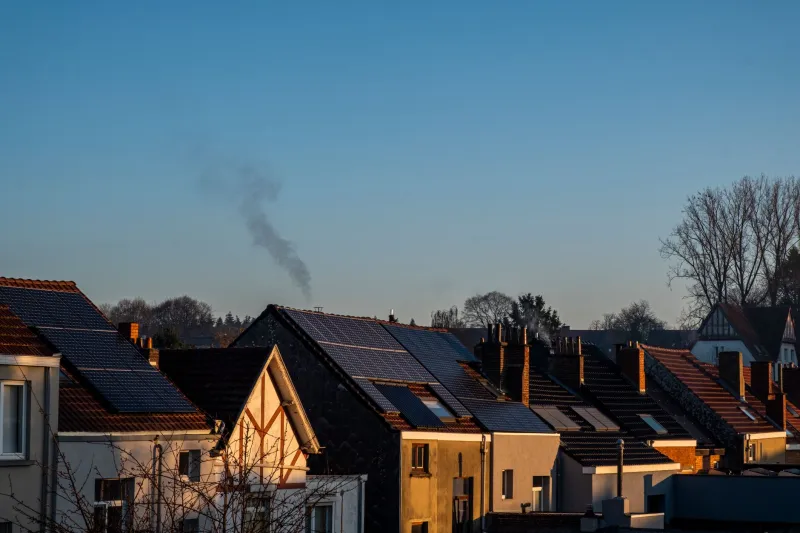
The Third Party Above Your Head: Mortgage Checks for Leased Solar Panels in 2026
Photo: Jwslubbock, CC BY-SA 4.0, via Wikimedia Commons
Solar panels are often presented as a straightforward energy-saving improvement. In many cases they are. But the mortgage treatment of a roof-mounted system depends less on how much electricity it generates and more on who owns it. If the panels are owned outright by the homeowner, the lender is usually looking at a home improvement. If they are leased, the lender may be looking at a third-party interest in the property.
That distinction matters in 2026 because energy costs remain a live concern for households, and buyers are increasingly likely to encounter homes with existing solar arrangements. Some of those arrangements date from the rent-a-roof schemes of the 2010s, when a solar company installed panels at little or no cost to the homeowner in exchange for the right to use the roof and receive the available tariff payments. Others are newer lease or power purchase arrangements. In either case, the paperwork can outlast the original sales pitch.
Why a solar lease is a mortgage issue
A mortgage is secured against the property. The lender needs to be confident that, if things go wrong, it can enforce its security and sell the home with a clear understanding of who has rights over it. A leased solar panel system can create rights of access, use and sometimes removal over the roof. It may also impose obligations on the homeowner to allow maintenance visits, insure equipment or keep the system connected.
Those rights and obligations do not necessarily make a property unmortgageable. But they do need to be disclosed and documented. A lender will want to know the term of the lease, whether it binds future owners, how it can be transferred on sale, and what happens if the solar company becomes insolvent or is taken over. The lender will also want reassurance that its own security ranks ahead of the solar company’s interest.
This is why some mortgage applications run into difficulty. The issue is rarely the panels themselves. It is the absence of a deed of consent, an unclear lease, or terms that a particular lender is not prepared to accept.
The paperwork lenders tend to ask for
When a property has leased solar panels, solicitors and lenders commonly ask for a bundle of documents. The exact requirements vary by lender, but the list often includes the solar lease or roof licence agreement, details of the solar provider, and evidence of how the arrangement is recorded against the title.
The key document is often a deed of consent, acknowledgement or postponement from the solar company in favour of the lender. In practice, this confirms that the solar company consents to the mortgage, agrees that its interest will not take priority over the lender’s security, and will cooperate with a sale or remortgage if the lender needs to enforce its rights. Some lenders have their own required wording. Others will accept a standard form from the provider if it covers the right points.
Lenders may also ask about the remaining lease term, the homeowner’s obligations, insurance arrangements, and what happens at the end of the agreement. If the lease is registered at HM Land Registry, the solicitor will check how it appears on the title. If it is not registered, that does not automatically mean it can be ignored, especially if a buyer or lender has notice of it.
Owned panels are usually simpler, but not always silent
Panels owned by the homeowner generally avoid the third-party interest problem. The lender is not usually asked to consent to a lease because there is no separate operator with rights over the roof. That said, owned systems are not entirely without checks. A lender or valuer may still ask about building regulations, structural fixing, insurance and maintenance. A poorly installed system or a roof in poor condition can raise questions regardless of ownership.
The bigger practical difference is transferability. With owned panels, the equipment usually passes with the property as part of the sale. With leased panels, the buyer may need to take on the lease, and the solar company may need to approve the transfer. That adds a step to the conveyancing process and can affect how quickly a mortgage can complete.
Buying a home with leased solar panels
If you are buying a property with leased panels, ask about the arrangement before you commit to a mortgage application. The seller should be able to provide the lease, the provider’s details, any existing lender consent, maintenance records and confirmation of the remaining term. It is also worth asking whether there are any exit fees, removal costs or transfer fees.
Instruct a solicitor or conveyancer who has seen solar leases before. They can check whether the lease is properly documented, whether it binds successors, and whether the terms are likely to be acceptable to your lender. Tell your mortgage broker about the panels early. Some lenders have specific criteria for leased solar panels, and some will decline certain schemes altogether. It is better to find that out before you pay for a valuation.
Remortgaging and transferring a property with leased panels
A remortgage can bring the same issues back to the surface. Your existing lender may already have consented to the solar lease, but a new lender will usually want its own documentation. If you are transferring ownership, for example after a separation or a change in joint borrowers, the new lender and the solar company may both need to consent.
Allow extra time. The solar provider may be slow to respond, may charge an administration fee, or may no longer exist under its original name. If the lease terms are unacceptable, the options are rarely quick or cheap. They may include asking the provider to vary the lease, buying out the system, choosing a lender that accepts the arrangement, or reconsidering the property altogether.
Questions to ask before applying
Before you submit a mortgage application, it is worth establishing a few basic facts. Who owns the panels? Is there a lease or roof licence, and how long does it run? Is it registered at HM Land Registry? Has the solar company provided a deed of consent or postponement? What access and maintenance rights does it have? What happens on sale, remortgage or repossession? Are there fees to transfer or remove the system?
The answers will not always be simple, but they give your broker and solicitor something concrete to work with. Leased solar panels are not automatically a barrier to borrowing. They are, however, a reason to gather evidence early and choose a lender that understands the arrangement. At Primary Mortgages, the practical message is straightforward: check the paperwork before the application, not after it.